Spotlight: World Aids Day

What is World AIDS Day?
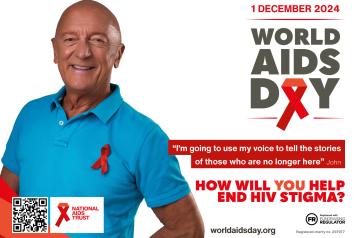
World AIDS Day is a global movement to unite people in the fight against HIV and AIDS. Since 1988, communities have stood together on World AIDS Day to show strength and solidarity against HIV stigma and to remember lives lost.
In the UK, more than 105,000 people are living with HIV. Globally, an estimated 38 million people live with the virus. More than 35 million people have died of HIV or AIDS related illnesses over the past 40 years, making it one of the most destructive pandemics in history.
Medical advances mean people with HIV can expect a long and healthy life and that we have the tools to stop HIV transmissions for good. But HIV continues to be highly stigmatised and misunderstood. At National AIDS Trust, the UK’s HIV rights charity, we are contacted weekly by people experiencing discrimination because of HIV, including in work, education, housing and even healthcare.
World AIDS Day exists to shine a light on the real experiences of people living with HIV today, while celebrating the strength, resilience and diversity of the communities most affected. It is a moment to inspire the leadership needed to create a future where HIV doesn’t stand in the way of anyone’s life.
What's the story behind the Red Ribbon?
The Red Ribbon is the universal symbol of awareness and support for people living with HIV. It was first devised in 1991, when twelve artists met to discuss a new project for Visual AIDS, a New York HIV-awareness arts organisation.
It was there that they came up with what would become one of the most recognised symbols of the decade: the Red Ribbon, worn to signify awareness and support for people living with HIV. The artists wanted to create a visual expression of compassion for people living with HIV and chose red for its boldness, and for its symbolic associations with passion, the heart and love.
Where can I get a HIV test from in Salford?
People living in Salford can access free STI tests from a number of places:
Online
Free home testing kits for STIs are available to order online if you do not have any symptoms, delivered in discreet packaging. Testing kits can be ordered for:
- Free chlamydia, gonorrhoea, HIV, syphilis and hepatitis kits – available from www.thenorthernsexualhealth.co.uk/home-testing-kit at 8.30am each day
- Free HIV testing for all residents, and syphilis testing for gay and bisexual men who have sex with men – available from www.freetesting.hiv
In person
If you have symptoms or are aged under 16 years, you should get tested in person. Testing is available at:
- The Northern Sexual Health Service
- Your GP practice
Services and Support
For Salford residents, Bolton NHS Foundation Trust provides support for people living with HIV at Lance Burn Medical Centre. For more information, please visit the HIV services website or call 0161 529 6892.
Tailored support for people newly diagnosed, living with, or at risk of getting HIV in Salford is provided by our PaSH Partnership organisations: George House Trust, LGBT Foundation, and BHA for Equality.
George House Trust
Provides support, advice and advocacy services for people living with HIV across Greater Manchester in relation to managing HIV, emotional wellbeing, confidence and skills in managing sexual relationships, self-care, and the social impact of HIV.
Their services include:
- One-to-one in-person, online and telephone support, including a counselling service. Referrals can be made through health professionals or via self-referral by calling 0161 274 4499 or emailing talk@ght.org.uk
- Group and informal peer support events
- Free formula milk for women living with HIV with infants
For more information visit GHT’s website.
The LGBT Foundation
Provide a range of support for people who identify as lesbian, gay, bisexual and transgender to increase their skills, knowledge and self-confidence to improve their health and wellbeing. Their sexual health services include:
- Free condoms: Free Condoms and Lube at your doorstep! - LGBT Foundation (18 years or older only)
- STI and HIV testing
- PrEP/PEP awareness
- Safer Sex Pamphlets and Sex Guides
- Outreach and group sessions
- Workshops and events across Greater Manchester
For more information visit Home - LGBT Foundation, email info@lgbt.foundation or call 0345 3 30 30 30.
BHA for Equality
Provide support and advice to individuals, families and communities from ethnically diverse groups to improve their health and wellbeing, their sexual health services include:
- Free and confidential rapid HIV and STI tests at a range of community venues across Greater Manchester and self-test HIV kits to do yourself at home: Greater Manchester HIV Testing - BHA for Equality
- Free condoms and lube through BHA’s postal service and from one of their community events: Order condoms - BHA for Equality
- A monthly clinic based at Pendleton Gateway (M6 5FX), on the last Thursday of the month, 11am to 2pm
- Information and resources on all matters of sexual and reproductive health and wellbeing available in a range of languages: Resources - BHA for Equality
- Community outreach events and education sessions
- PrEP/PEP advice
- Resources and training for health professionals
For more information visit the BHA website or email pash@thebha.org.uk.
Pre-exposure prophylaxis (PrEP)
Preventative medication called pre-exposure prophylaxis (PrEP) can also be taken to prevent HIV transmission in high-risk groups. It is still important to use condoms while taking PrEP to prevent the transmission of other STIs.
For advice on starting, suspending or getting repeat PrEP prescriptions: PrEP at The Northern Sexual Health website or your GP Practice.
More information on HIV, PrEP and postexposure prophylaxis (PEP) can be found online via the Terrence Higgins Trust.